





Marine Exhaust Elbows: Small Components, Big Impact on Engine Efficiency
In marine exhaust systems, small components often carry the greatest responsibility. Marine exhaust elbows are a clear example. Although compact in size, these parts play a critical role in directing exhaust gases safely away from the engine while managing heat, water flow, and corrosion exposure.
For mechanics and boat service centers, understanding how marine exhaust elbows function within boat exhaust systems is essential. Improper selection, installation, or maintenance can affect exhaust temperature, increase saltwater corrosion, and reduce overall engine efficiency. This article takes a detailed, technical look at marine exhaust elbows, how they integrate with marine exhaust systems, and why they matter in both commercial and recreational vessels.
Understanding Marine Exhaust Systems
Marine exhaust systems are designed to remove combustion gases from marine engines while controlling temperature, noise, and water intrusion. Unlike automotive exhaust systems, marine exhaust systems must operate in confined engine rooms and harsh saltwater environments.
A typical marine engine exhaust system includes multiple components working together:
- Marine exhaust elbows
- Exhaust risers
- Wet exhaust mufflers
- Water exhaust mufflers
- Thru hull exhaust system components
- Marine silencers exhausts
Each component must handle heat, vibration, and moisture without compromising safety or performance.
What Are Marine Exhaust Elbows
Marine exhaust elbows are curved connectors that redirect exhaust gases from the engine manifold into downstream exhaust components. They often introduce cooling water into the exhaust stream, making them a critical transition point between hot engine gases and marine wet exhaust systems.
Primary Functions of Marine Exhaust Elbows
Marine exhaust elbows serve multiple technical purposes:
- Direction Control
Exhaust elbows redirect exhaust flow downward or sideways to align with mufflers or exhaust risers. This ensures proper routing within tight engine room layouts. - Heat Management
Many marine exhaust elbows introduce cooling water to lower exhaust temperature before gases reach hoses and wet exhaust mufflers. - Water Separation
Proper elbow design helps prevent seawater from backflowing into the engine cylinders, especially during shutdown. - Corrosion Protection
Material selection directly affects resistance to saltwater corrosion and long term durability.
Marine Exhaust Elbows and Engine Efficiency
Although often overlooked, marine exhaust elbows directly affect engine performance. Poor exhaust flow or internal blockage can create back pressure, reducing engine efficiency and increasing fuel consumption.
How Exhaust Flow Affects Performance
When exhaust gases cannot exit freely:
- Exhaust temperature rises within the manifold
- Combustion efficiency decreases
- Turbochargers, where fitted, operate under higher stress
- Engine lifespan may be reduced
Properly sized and maintained marine exhaust elbows ensure smooth exhaust flow through the marine engine exhaust system.
Exhaust Elbows and Exhaust Temperature Control
Exhaust temperature management is one of the most important roles of marine exhaust elbows. Marine engines generate extreme heat, and unmanaged exhaust gases can damage downstream components.
Cooling Methods Used in Exhaust Elbows
Marine exhaust elbows manage heat in several ways:
- Introducing seawater into the exhaust stream
- Increasing surface area for heat dissipation
- Directing hot gases away from sensitive engine room components
This temperature reduction protects wet exhaust mufflers, marine ventilation fans, and exhaust hoses from heat degradation.
Materials Used in Marine Exhaust Elbows
Material choice determines how well marine exhaust elbows withstand corrosion, heat, and pressure.
Common Marine Exhaust Elbow Materials
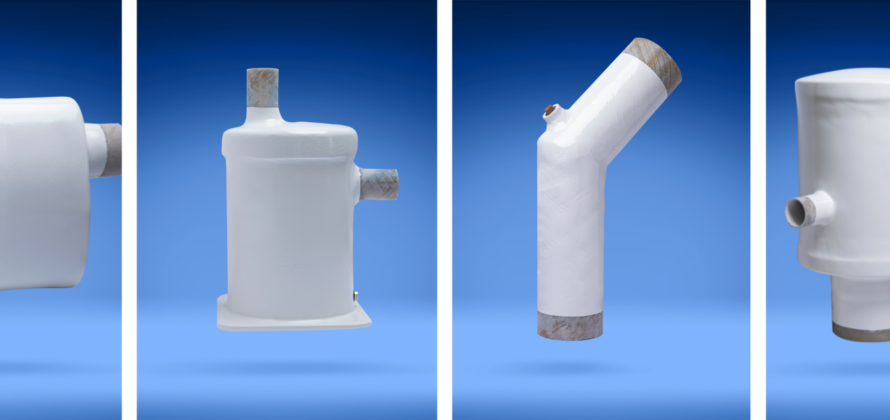
Fiberglass Reinforced Plastic (FRP) Marine Exhaust Elbows
Fiberglass marine exhaust elbows are common in marine wet exhaust systems.
- Lightweight and corrosion resistant
- Suitable for wet exhaust muffler configurations
- Good for sound attenuation
- High strength to weight ratio
- Require proper reinforcement near high heat zones
- Often used in custom marine exhaust applications
Stainless Steel Elbows
Stainless steel elbows are widely used in high performance marine exhaust systems.
- Strong resistance to exhaust temperature extremes
- Durable, depending on grade (316L is better suited for marine applications than 304L)
- Often used in custom marine exhaust applications
- Heavier and more expensive than FRP options
Cast Iron and Coated Steel
Traditional materials are still found in older marine engine exhaust systems.
- Prone to saltwater corrosion
- Shorter service life in marine exhaust florida environments
- Heavier weight which can hamper engine performance
Saltwater Corrosion and Exhaust Elbow Failure
Saltwater corrosion is one of the most common causes of marine exhaust elbow failure. Internal corrosion often occurs unseen until flow restriction or leakage becomes severe.
Signs of Corrosion Damage
Mechanics should inspect for:
- Internal scaling or rust buildup
- Reduced exhaust flow
- Elevated exhaust temperature readings
- Water leakage near the exhaust riser
Preventive replacement schedules are essential in saltwater applications, particularly for boats operating year round.
Exhaust Elbows vs Exhaust Risers
Although closely related, exhaust elbows and exhaust risers serve different roles.
Exhaust Riser Design Explained
Exhaust risers elevate exhaust gases above the waterline before entering the thru hull exhaust system. This elevation prevents water intrusion during rough seas or engine shutdown.
Key Differences
| Component | Primary Function | Location |
| Marine exhaust elbow | Redirects flow and introduces cooling water | Directly off engine |
| Exhaust riser | Raises exhaust above waterline | Downstream of elbow |
Marine exhaust riser design must align precisely with the elbow to maintain proper exhaust geometry.
Integration With Marine Wet Exhaust Systems
Most modern vessels rely on marine wet exhaust systems to manage noise and heat. Marine exhaust elbows are the starting point for these systems.
Role in Wet Exhaust Muffler Performance
Proper elbow placement ensures:
- Even water distribution inside the wet exhaust muffler
- Reduced noise levels
- Protection of exhaust hoses from overheating
Water exhaust mufflers and marine wet exhaust mufflers depend on correct upstream flow dynamics.
Marine Exhaust Elbows in Generator Exhaust Systems
Marine generator exhaust systems require special attention due to continuous runtime and noise sensitivity.
Key Considerations for Generator Exhaust Elbows
- Lower exhaust temperature tolerance
- Integration with muffler for generators quiet operation
- Compatibility with marine generator exhaust silencer systems
Improper elbow sizing can result in excessive noise or reduced generator efficiency.
Custom Marine Exhaust Elbows for Specialized Vessels
Certain vessels, including superyacht exhausts and commercial boats, require custom marine exhaust elbows.
Why Custom Designs Are Used
Custom marine exhaust elbows are often required when:
- Engine room space is limited
- Exhaust routing must avoid structural elements
- Noise and vibration control is critical
Custom marine exhaust systems allow precise alignment with marine silencers exhausts and ventilation systems.
Relationship Between Exhaust and Boat Ventilation Systems
Exhaust performance cannot be separated from ventilation. Boat ventilation systems regulate airflow within engine rooms, supporting exhaust cooling and safety.
How Ventilation Supports Exhaust Efficiency
- Marine ventilation fans remove heat buildup
- Engine room ventilation system maintains airflow balance
- Poor ventilation can raise ambient exhaust temperature and accelerate component failure.
Marine Ventilation Fans and Exhaust Safety
Ventilation marine components work alongside exhaust systems to maintain safe operating conditions.
Common Ventilation Components
- Marine ventilation fans
- Marine blower units
- Ventilation blowers
- Boat exhaust fan systems
These components prevent exhaust gas accumulation and support consistent exhaust flow.
Marine Exhaust Elbows and Noise Control
Noise reduction is a major concern in modern boat exhaust systems.
How Elbows Affect Sound Levels
- Smooth internal bends reduce turbulence
- Proper alignment improves muffler efficiency
- Integration with marine dry exhaust silencer systems lowers vibration
Marine exhaust silencer tips and silencers rely on stable upstream exhaust flow.
Maintenance Best Practices for Marine Exhaust Elbows
Regular inspection and replacement are essential for long term reliability.
Inspection Checklist
- Check internal corrosion annually
- Inspect gasket seals and mounting surfaces
- Monitor exhaust temperature trends
- Look for signs of water leakage
Failure to maintain marine exhaust elbows can compromise the entire marine exhaust system.
Choosing Marine Exhaust Parts and Suppliers
Mechanics often source components through marine supply dealers and exhaust system suppliers.
What to Look for in Quality Exhaust Parts
- Material certification
- Compatibility with existing marine exhaust systems
- Proven durability in saltwater environments
Boat parts suppliers near me often stock standard components, while custom applications may require specialist exhaust system manufacturers.
Frequently Asked Questions
1. What causes marine exhaust elbows to fail
The most common causes are saltwater corrosion, internal scaling, excessive exhaust temperature, and improper ventilation.
2. How often should marine exhaust elbows be replaced
Replacement intervals vary, but in saltwater environments, inspection every year and replacement every three to five years is common.
3. Are stainless steel elbows better than fiberglass
Stainless steel elbows in 316L grade offer higher temperature tolerance and durability, while fiberglass marine exhaust elbows are more corrosion resistant, light weight and more cost effective.
4. Can a blocked exhaust elbow affect engine performance
Yes, restricted exhaust flow increases back pressure, reduces engine efficiency, and raises exhaust temperature.
5. Do exhaust elbows affect generator noise
Yes, correct elbow sizing and alignment help marine generator exhaust systems operate quietly when paired with proper mufflers.
Conclusion
Marine exhaust elbows may be small components, but their impact on engine efficiency, exhaust temperature, corrosion resistance, and system reliability is significant. For mechanics and service centers, understanding how these parts interact with marine exhaust systems, ventilation systems, and mufflers is essential for safe and efficient vessel operation. Proper selection, installation, and maintenance of marine exhaust elbows help protect engines, reduce noise, and extend the lifespan of the entire exhaust system.
If you need expert advice, quality components, or professional support, contact us for your marine exhaust needs. Proper selection, installation, and maintenance of marine exhaust elbows help protect engines, reduce noise, and extend the lifespan of the entire exhaust system.